

Explore the Benefits of Retiring to North San Diego County






Compare Climates of 34 Cities Located Throughout the U.S.A.

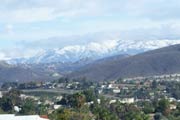
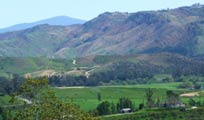


-Winter Snow in Distant Mountains - Spring's Green Hills - Summer Beach Fun -Practically Anything Grows-
The Details About-
North San Diego County's
Great Climates
Temperatures
|
The table below shows that our temperatures are mild throughout the year. It also shows the effects of the Pacific Ocean and of Microclimates (elevation, exposure to ocean breezes, etc.) on the seasonal temperature extremes. Both the average temperature and the temperature extremes increase as you go further inland but they may also be affected by the Microclimate of the area. For example, the temperature in Carlsbad (near the coast) seldom exceeds 80°F during the summer and seldom drops below 39°F during the winter, while eastern Escondido and Valley Center usually experience a few days of temperatures around 100°F in the summer and a few nights slightly below 32°F in the winter. Fallbrook, although further inland than Escondido, may have slightly milder temperatures than Escondido because of its exposure to ocean breezes. |
Average High and Low January and August Temperatures
|
PLACE |
Approx. Miles From the Coast |
AVERAGE (HI-LO) TEMPERATURE | |||
| January | August | ||||
| °F | °C | °F | °C | ||
| Oceanside Marina | 0 | 60-40 | 16-4.4 | 69-62 | 21-17 |
| Carlsbad Airport | 3.2 | 62-41 | 17-5.0 | 72-62 | 22-17 |
| Vista City | 8 | 65-43 | 18-6.1 | 79-60 | 26-16 |
| Rancho Bernardo1 | 12 | 68-43 | 20.5-6.1 | 87-60 | 30-16 |
| Escondido City | 15 | 69-43 | 20-6.1 | 89-63 | 32-17 |
| Fallbrook City | 21 | 68-42 | 20-5.6 | 84-61 | 29-16 |
|
Notes: 1. Rancho Bernardo Temperature data is not available. The data shown are estimates from neighboring Poway and Escondido temperature data. |
|
Relative Humidity Few hot, muggy summer days occur anywhere in North San Diego County because it seldom rains during the summertime. The warmer inland summer afternoons are accompanied by low (30-65%) relative humidity. The afternoon humidity is higher near the coast but the temperature is lower and therefore, the outdoor weather usually remains comfortable throughout the day. Annual Precipitation Average annual precipitation ranges from 9-16 inches (23-41cm) of rain per year, mostly falling from early November through March. Storms and Earth Quakes Hurricanes- We very seldom have hurricanes (last Recorded, deadly hurricane called a "typhoon" to hit So. California was on Sept. 25, 1939). Storms- Hail storms and tornadoes are also extremely rare and we have few windy or rainy days. We do have occasional Santa Ana conditions, usually occurring during the months of October through February, where easterly winds from the desert produce a few warm (sometimes hot) and windy days.
Earthquakes- We are located approximately 30 miles from the nearest
major Earthquake Fault. The epicenter of the last major earthquake to be felt here was
located near Guadalupe Victoria, Baja California, Mexico; approximately 150
miles southeast of North San Diego County. It was the 7.2 magnitude
earthquake that occurred on Easter Sunday, April 4, 2010. Although not in our area, it was the strongest earthquake felt here
during the 27 years we have lived here. It was also felt throughout most of So. California and as far away as
Phoenix, AZ and Las Vegas, NV. It caused very little damage to our area. Air Quality Although we experience some infrequent, short-term air pollution (seldom visible), our Air Quality is nearly always "Good." Unlike some U.S. cities and other areas of Southern California, we have very little smog. Sunshine The sun shines from approximately 68% of time possible on the coast to approximately 77% inland. May and June are the months with the least amount of sunshine. Morning overcast and afternoon sunshine is common along the coast in the spring and early summer. Growing Season The growing seasons range from around 270 days inland to 365 days along the coast. |
|
Related Web Pages
|
|
Please feel free to
|
|
Our Business Is HELPING FOLKS RETIRE TO NORTH SAN DIEGO COUNTY |
|
Disclaimer: Although we believe the information presented on this website and its links to be reliable, it is impossible to verify the accuracy of everything presented and therefore, we assume no responsibility for its use. |
|
© 2005-2018 Ralph Anderson
& Associates - All Rights Reserved
|